What Does A Car Diagnostic Check Actually Do? A Geelong Mechanic Explains
If you have ever had a dashboard warning light come on and been told you need a diagnostic check, you might have wondered what that actually means. A diagnostic check is one of those services that sounds technical, costs money, and involves a device being plugged into your car — but beyond that, many drivers are not quite sure what happens or why it matters.
This blog explains the process in plain English, from what gets connected to your car, to what the results actually tell a mechanic, and why a warning light that appears while the car seems to drive fine is still worth taking seriously.
What Is a Car Diagnostic Check?
A car diagnostic check involves connecting a scanning tool to your vehicle's onboard computer — a system known as the ECU, or Engine Control Unit — to read any fault codes the computer has stored. Modern vehicles are fitted with dozens of sensors that monitor everything from exhaust emissions and fuel delivery to brake pressure and transmission behaviour. When one of those sensors detects a reading outside the normal range, it logs a fault code and, in many cases, triggers a warning light on the dashboard. The diagnostic scanner reads those stored fault codes and translates them into information a mechanic can work with. Without it, identifying why a warning light has come on would involve a time-consuming process of elimination that is neither efficient nor cost-effective. The port the scanner plugs into is called the OBD-II port — On-Board Diagnostics, second generation — and it has been a standard feature on Australian vehicles since the late 1990s. It is typically located under the dashboard near the steering column.
What Do Fault Codes Actually Mean?
A fault code is a standardised alphanumeric reference — for example, P0420 or P0171 — that identifies which system or component has triggered an alert and what type of fault was detected. The codes are standardised across manufacturers, which means a P0420 on a Toyota means the same thing as a P0420 on a Volkswagen: a catalyst efficiency fault in the first bank of the exhaust system. What a fault code does not tell you is the exact cause. It narrows the field significantly — it tells the mechanic which system to investigate — but the code itself is a starting point rather than a diagnosis. A P0171 code, for example, indicates the engine is running lean on bank one. That could be caused by a faulty oxygen sensor, a vacuum leak, a dirty mass airflow sensor, a failing fuel injector or a fuel pressure problem. The code points in the right direction; the mechanic's knowledge and inspection experience determine what is actually wrong. This is an important distinction when evaluating a diagnostic check. A scan tool reading codes is the first step in the diagnostic process, not the complete answer. When a mechanic explains what the codes found suggest and what testing or inspection is needed next, that is the professional knowledge you are paying for alongside the scan itself.
What Happens During a Diagnostic Check?
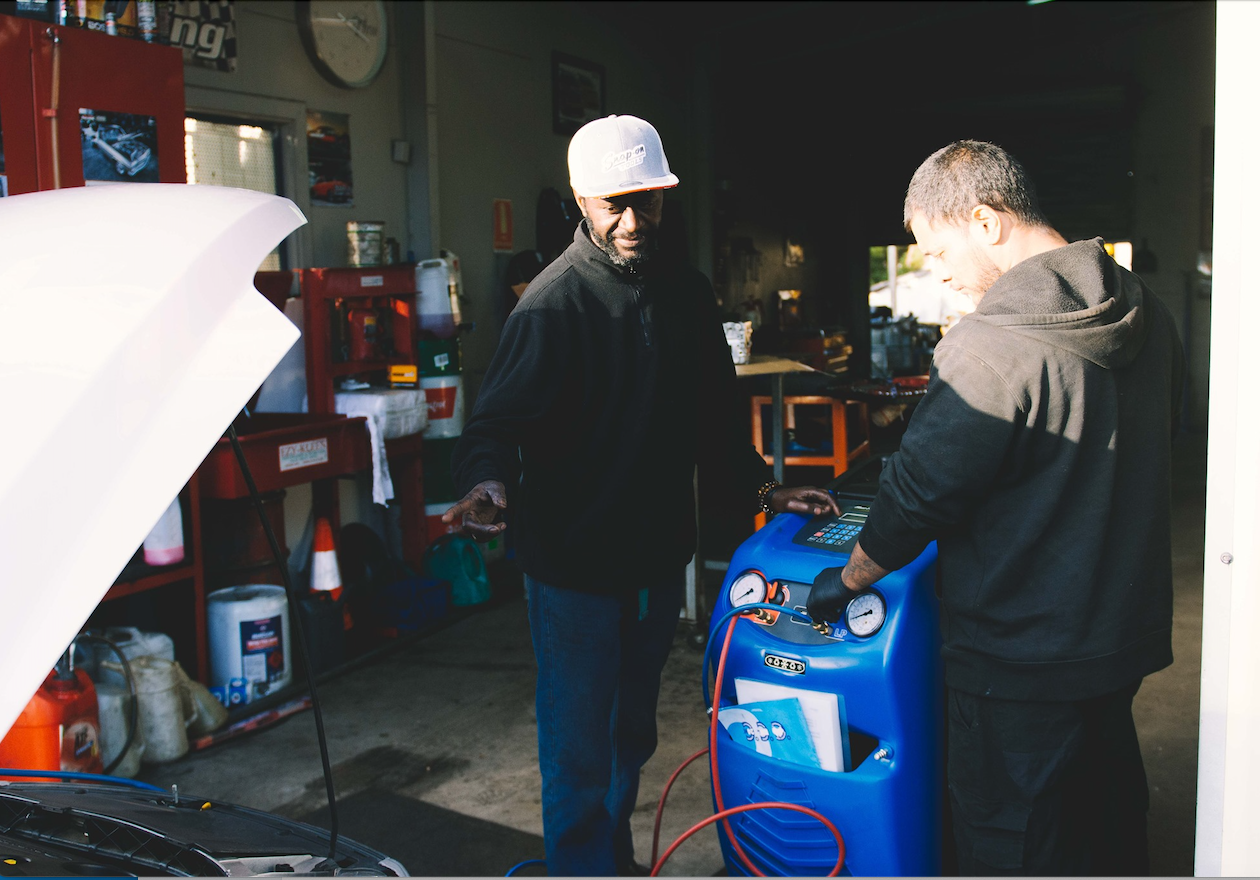
The process itself is relatively quick and straightforward for the scan component. The mechanic connects the scanner to the OBD-II port, the device communicates with the vehicle's ECU and any stored or pending fault codes are displayed on the scanner screen.
In addition to fault codes, a diagnostic scan typically provides:
- Live data — real-time sensor readings showing how components are performing during operation, such as coolant temperature, fuel trim values, oxygen sensor output and throttle position. This can reveal faults that only occur under certain conditions and may not have logged as a stored code yet
- Freeze frame data — a snapshot of the vehicle's operating conditions at the exact moment a fault code was triggered, which helps the mechanic understand the context in which the fault occurred
- Readiness monitors — status indicators showing whether various emission-related systems have completed their self-checks, which is relevant for roadworthy assessments in Victoria
After reviewing the scan data, the mechanic will discuss the findings, explain what the codes suggest and outline what further investigation or repair is recommended. At North Geelong Automotive, nothing proceeds to repair without the customer's approval and a clear quote.
Why Is My Warning Light On If the Car Seems Fine?
This is probably the most common scenario that prompts a diagnostic check. The check engine light comes on, or a service reminder appears, but the car starts, drives and feels perfectly normal. For check engine light Geelong drivers experience, it is tempting to leave it — and many drivers do, for weeks or months. The reason this is worth investigating rather than ignoring comes down to how the ECU is designed to respond to faults. For many fault types, the ECU flags the issue and illuminates the light but does not intervene in vehicle operation unless the fault reaches a certain threshold. The car drives normally because the ECU is compensating or because the fault has not yet progressed to a point where it affects performance. That does not mean the underlying issue is minor or that it will stay that way.
Some common reasons for a car warning light on an otherwise-driving-fine vehicle include:
- Oxygen sensor fault — an oxygen sensor that is reading inaccurately may not affect driving noticeably but will affect fuel economy and emissions, and left unaddressed can cause damage to the catalytic converter, which is a significantly more expensive repair
- Emissions system fault — issues with the EGR valve, evaporative emission system or catalytic converter efficiency may trigger a light without immediately affecting driving, but indicate a developing problem
- Early transmission warnings — some transmission fault codes log before any noticeable change in shift quality, giving a window to address the issue before it progresses
- Low oil pressure warning — this can be intermittent in early stages before it becomes constant, and is a fault that should never be ignored regardless of how the car feels
The pattern with most of these is that acting on them early — when the fault code first appears — is less expensive than waiting until the issue develops into something more significant.
Does a Diagnostic Check Always Reveal What Is Wrong?
A diagnostic check reads what the ECU has logged. If a fault has not registered a code — because the sensor monitoring it has not detected a deviation from normal, or because the fault is intermittent and did not trigger during the drive to the workshop — it will not appear in the scan. This means a clean scan result does not necessarily mean nothing is wrong. A mechanic who combines scan data with a physical inspection, a road test and their own knowledge of common failure patterns for specific makes and models will catch things a scan alone might not surface. It also means that a diagnostic check is most useful when a warning light is present or when there are noticeable symptoms — unusual noise, rough running, hesitation, poor fuel economy — that suggest a fault worth investigating. For a car with no symptoms and no warning lights, a diagnostic scan as a standalone check adds limited value compared to a thorough service inspection.
How Much Does a Car Diagnostic Check Cost in Geelong?
Diagnostic check pricing varies between workshops. At North Geelong Automotive, the diagnostic fee reflects the time spent by a qualified mechanic reviewing the scan data, assessing live readings and providing a clear explanation of findings — not just the few minutes it takes to plug in a device. In most cases, if the diagnostic check leads directly to a repair being carried out at the same visit, the diagnostic fee is incorporated into the overall repair cost rather than charged separately on top. It is worth asking about this when you book.
When Should You Book a Diagnostic Check?
If any of the following apply, a diagnostic check is worth arranging:
- A warning light is on — whether it is the check engine light, a service indicator, a transmission warning or any other dashboard alert
- You have noticed a change in how the car drives — rough idle, hesitation on acceleration, unusual fuel consumption or a change in shift quality
- You are buying a used car and want to know whether any fault codes are stored before you commit to the purchase
- You have had a repair completed and want to confirm the fault code has cleared and the system has returned to normal operation
At North Geelong Automotive, we are the mechanic Geelong drivers rely on for straightforward, honest advice. If car diagnostics Geelong drivers need has been on your mind — or your check engine light has been on for longer than you would like to admit — our team is ready to help. For car warning light issues, car diagnostics in Geelong or any other mechanical concern, visit our website or call us on (03) 5278 8595 to book your check today.